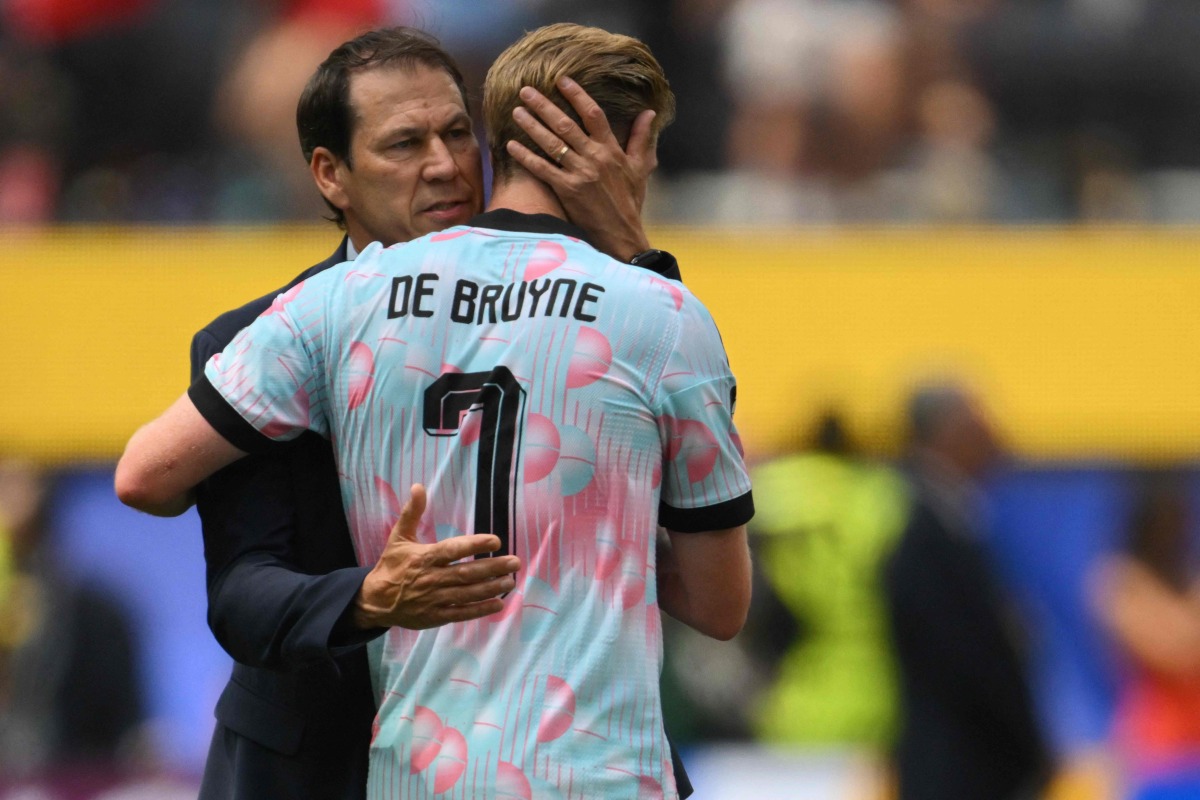
Belgium’s head coach Rudi Garcia and midfielder Kevin De Bruyne hug after the match. PICS: AFP
Doha, Qatar: Belgium’s finest era ends without the World Cup glory it once promised.
For more than a decade, Belgium’s golden generation captivated world football with a squad overflowing with talent. They climbed to the top of the FIFA World Ranking, produced some of the game’s finest players and consistently entered major tournaments as one of the genuine contenders.
Yet as the curtain fell on their FIFA World Cup 2026 campaign, the one prize that always eluded them remained out of reach.
Belgium’s journey ended in the quarter-finals with defeat to Spain on Friday, bringing to a close another impressive World Cup campaign and, perhaps, the final World Cup appearance for Thibaut Courtois, Kevin De Bruyne, Romelu Lukaku and Axel Witsel the last remaining pillars of Belgium’s golden generation.
The Red Devils leave North America knowing they once again challenged deep into the tournament.
This edition began cautiously. Belgium were held to a 1-1 draw by Egypt before another frustrating stalemate against Iran left questions over whether they could live up to expectations.
Those doubts quickly disappeared after a commanding 5-1 victory over New Zealand secured top spot in the group. Belgium then showed their character in the Round of 32, scoring twice in the final five minutes of normal time to force extra time against Senegal before completing a remarkable 3-2 comeback victory.
They produced arguably their finest display of the tournament in the Round of 16, sweeping aside co-hosts the United States 4-1.
Only Spain were able to halt their progress, edging a fiercely contested quarter-final to deny Belgium another place among the last four.
While the results will be remembered, this tournament also served as another reminder of the remarkable careers of the players who carried Belgium through their greatest era.
Courtois once again showed why he is regarded among the world’s finest goalkeepers with a series of crucial saves. De Bruyne remained the creative heartbeat of the side, while Lukaku, Belgium’s all-time leading scorer, continued to deliver important goals, reminding everyone why he has been one of the defining forwards of his generation.
Together, the trio represented the backbone of a generation that consistently challenged the world’s elite.
Belgium coach Rudi Garcia admitted the defeat carried extra emotion. “I’m disappointed for those that maybe might not come back with the national team,” Garcia said after the match. “My veteran players, who are maybe on their way out, could have one last hurrah.”
Their greatest World Cup achievement came in 2018 when Belgium defeated England to finish third, the nation’s best-ever result at the tournament. They also reached the quarter-finals in 2014 before enduring the disappointment of a group-stage exit in Qatar four years ago.
North America offered one final reminder of what this generation was capable of. They recovered from a slow start, played some entertaining football and once again reached the last eight before bowing out with dignity against one of Europe’s strongest sides.
Whether Courtois, De Bruyne, Lukaku or Witsel return for the 2030 World Cup remains uncertain and Belgium’s next generation is already preparing to take centre stage.
This team may never be remembered as world champions, but they changed the way Belgian football was viewed across the globe. Their story ends without the trophy they dreamed of lifting, yet their legacy as the greatest generation in the nation’s football history is already secure.